Friday, 25 October 2013

Inspired by the Paper exhibition, today I played around with making my own paper. I used different coloured silk that was then pressed between sheets of mesh with wall paper paste to form the paper. After leaving it over night, the silk and paste dried out to make a stiff sheet that I'm hoping to print on top of. The bright orange and silky texture of the paper reminds me of the saffron coloured robes that hundreds of monks wear in Luang Prabang.


Wednesday, 23 October 2013

Here are some initial research drawings taken from my own photos of Luang Prabang. They show the alms giving ceremony and various temples and motifs from around the town.


Here are some of the photos from my trip that have been informing my drawings


Sunday, 20 October 2013

Since one of the main things I want to focus on this semester is print making I made sure I got down to Multiplied 2013 at Christie's gallery in Kensington. The show was great, it gave me lots of inspiration to get in the print room. Here are a few of my favourite things that I saw...


These silk screen prints by Chitra Merchant really struck me. The visual content is fairly similar to what I'm dealing with. The limited colour palette and use of silhouettes and minimal lines creates an air of mystery and a dream like sense about the prints. This is something I definitely felt whilst in Luang Prabang. I really love the overlaying of different textures that create a unified landscape within the images.


Alfonso Albcete. Again, I really love the use of block colours and silhouettes in creating depth and texture.


Katherine Jones, 'Belly Pot'. Lovely surreal mix of structures, organic forms and different lines.


Emma Stibbon. Amazing intaglio prints conjuring vast landscapes made from beautiful printed textures. 


Thursday, 17 October 2013

I have decided to focus on the town of Luang Prabang in Laos for my campaign for UNESCO World Heritage. This quote from the UNESCO WHC website states why the town is inscribed on the list:

'Criterion (ii):  Luang Prabang reflects the exceptional fusion of Lao traditional architecture and 19th and 20th century European colonial style buildings.
Criterion (iv): Luang Prabang is an outstanding example of an architectural ensemble built over the centuries combining sophisticated architecture of religious buildings, vernacular constructions and colonial buildings.
Criterion (v): The unique townscape of Luang Prabang is remarkably well preserved, illustrating a key stage in the blending of two distinct cultural traditions.
Integrity
The integrity of the inscribed site is linked to an architectural and cultural heritage set in a natural landscape that reflects its Outstanding Universal Value.  All of the significant elements, especially the urban fabric and major monuments (temples, public buildings, traditional houses), have been preserved.
However, there are some threats to the site due to the rapid development of the town and strong economic pressures, many of which are related to tourism (transformation of use of buildings, departure of residents, illegal construction).'

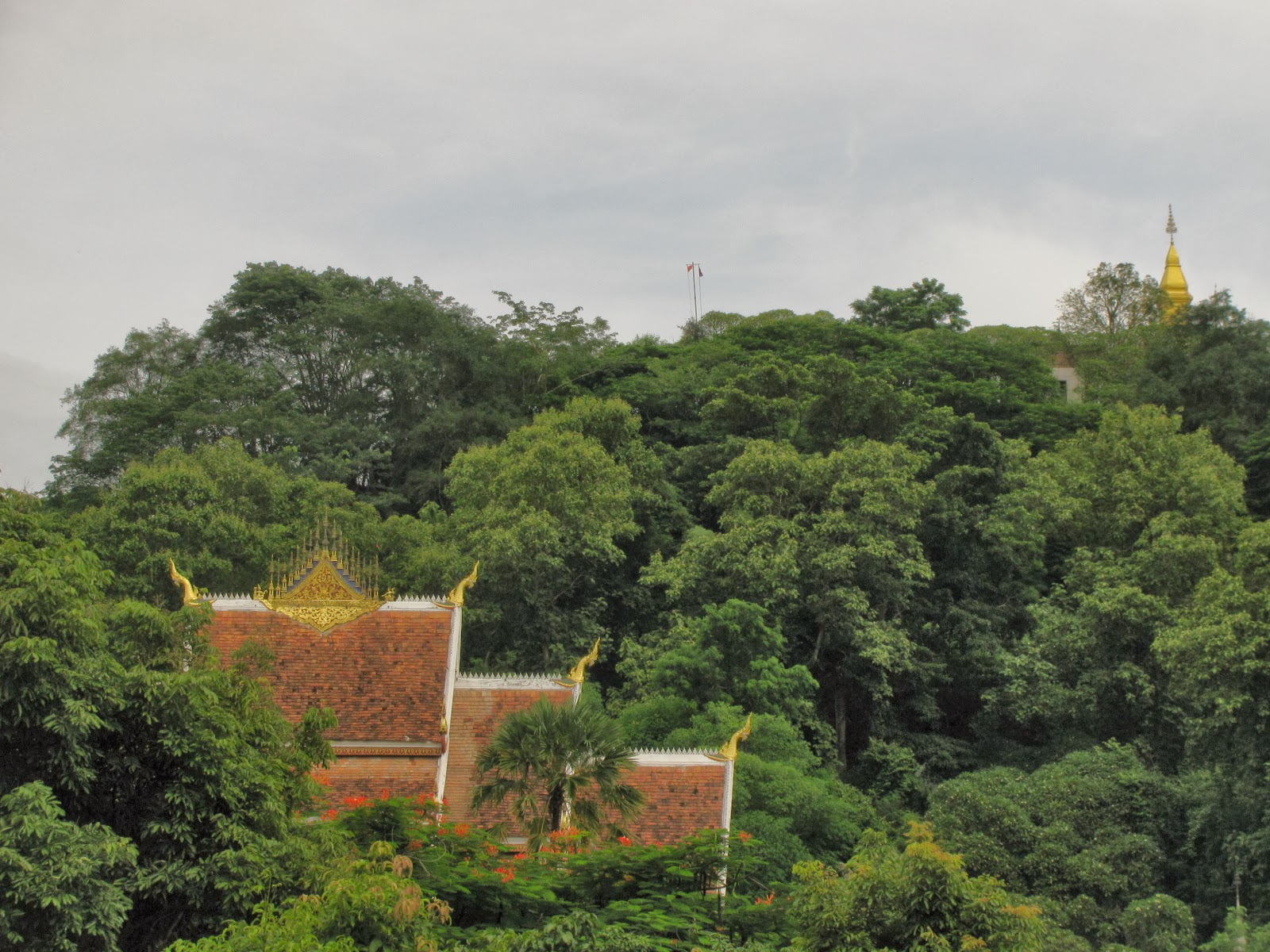
Some of my personal photographs demonstrate the above criterion and the fusion of architecture and natural forms that create a 'cultural landscape'...


Saturday, 12 October 2013

Whilst researching charities that protect heritage and culture, I came across the  UNESCO World Heritage Convention. This is a charity that sets out to protect natural and cultural sites of 'outstanding universal value' around the world by educating and working with locals to ensure they are maintained responsibly. After reading the list of inscribed sites I realised I have been to quite a few, including recently to the huge temple complex of Angkor Wat in Cambodia and the ancient town of Luang Prabang in Laos. I think this is a better area of focus for a campaign as I already have knowledge of and plenty of first hand research about these places.

Tuesday, 8 October 2013

Although I enjoy working with narratives, I'd like to move away from producing books as final pieces as I have done this for most of my previous projects. I feel like that leaves me with producing some pretty prints about African culture with no purpose. However one suggestion for how to contextualise these was to find a charity that sets out to protect culture and heritage and turn these prints into a campaign for them. So far I have identified Survival International (http://www.survivalinternational.org/). This charity works with disappearing tribes in Africa in order to help preserve their culture and traditions and ensure their survival.

Monday, 7 October 2013

Last year I really enjoyed drawing tribal objects, masks, charms and amulets from various museums around London. It was a great source of inspiration and led to me looking at tribal art for my dissertation. I'd like my practical work to link in to this in some way but I'm not sure how. I also want to focus this semester on print making as we won't have these facilities soon! Here are some initial drawings taken from the British Library to start the project off...